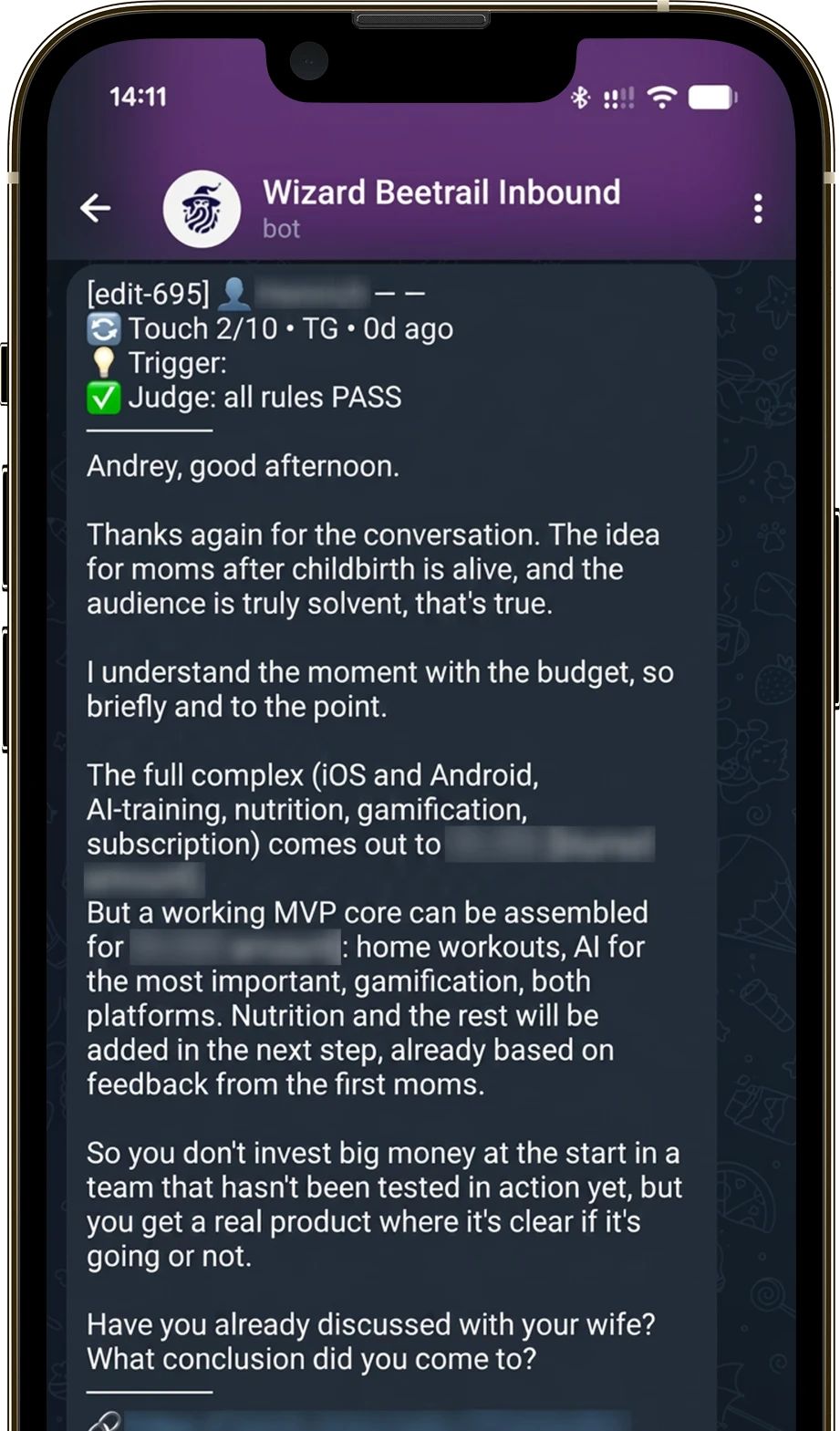




Wizard AI Our own AI agent. It talks to inbound leads on Telegram and on the site, qualifies them, and passes the manager everything needed to reply.
DocuFlow AI is an enterprise platform that automates document processing with AI.
The system parses and classifies incoming documents and picks out the data that matters. Manual review drops from a full working day to a couple of hours.
DocuFlow AI was built for companies whose flow of incoming documents is simply too large to handle by hand. Staff used to spend half the working day on it: reading every contract or invoice, pulling out the fields, copying them into the accounting system and making sure nothing slipped through. We built a product where AI takes that routine on: it parses the document itself, works out the type, finds the data that matters and shows a finished record straight away. Working with documents becomes far faster and calmer, and the team spends its time on decisions rather than moving fields by hand.

Beetrail embedded AI into document processing. The AI parses and classifies incoming documents and extracts the data that matters, so manual processing fell from a full working day to a couple of hours. It suits businesses drowning in routine that can no longer keep up with a growing workload.
Documents were handled by hand: read, sorted, fields carried across one at a time. That ate a full working day of someone’s time — and a tired person makes mistakes. The flow kept growing, the team fell behind, and documents that mattered were lost in the queue waiting to be processed.
We put AI into document processing: it parses the incoming document itself, classifies it by type and pulls out the fields that matter. A person is left checking the result rather than retyping it. Manual processing fell from a whole day to a couple of hours.
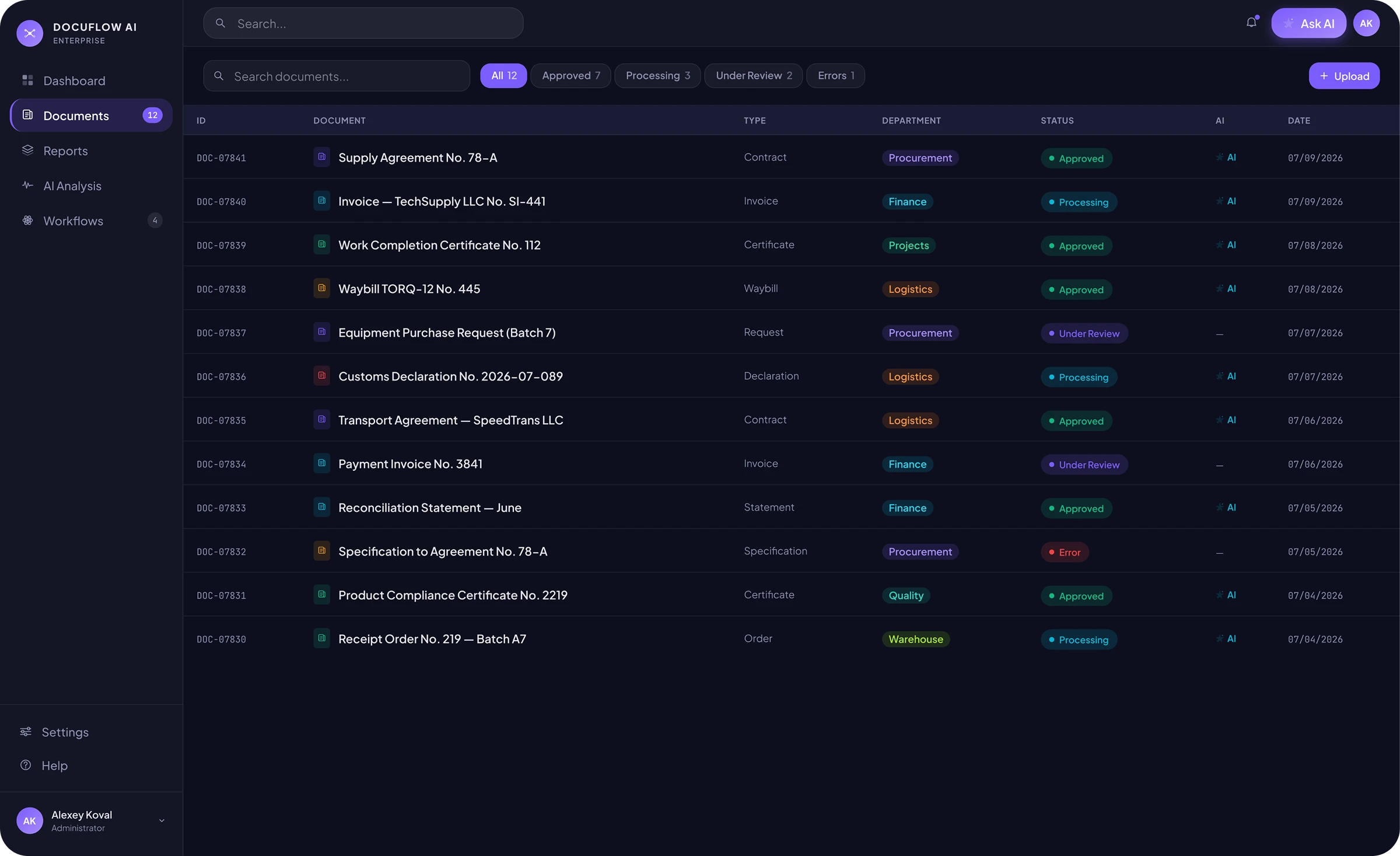
DocuFlow AI is a document workflow where AI is part of every screen. Incoming files are parsed automatically and land in a single list filtered by type, department and priority — all that is left for a person is to check and approve what the system decided.
The AI pulls the key data out of the file and works out its type. Manual entry is gone — a person only checks and approves.
Every document in the company sits in one workspace, filtered by type, department, status and processing priority.
The whole document flow in charts: movement through the stages, deadlines by department, volumes by month. Reports build with one click or on a schedule, with no hand-assembled spreadsheets.
Supplier changes, licence renewals and budgets all run through one flow. The AI suggests the deadline and priority from the history of similar cases.
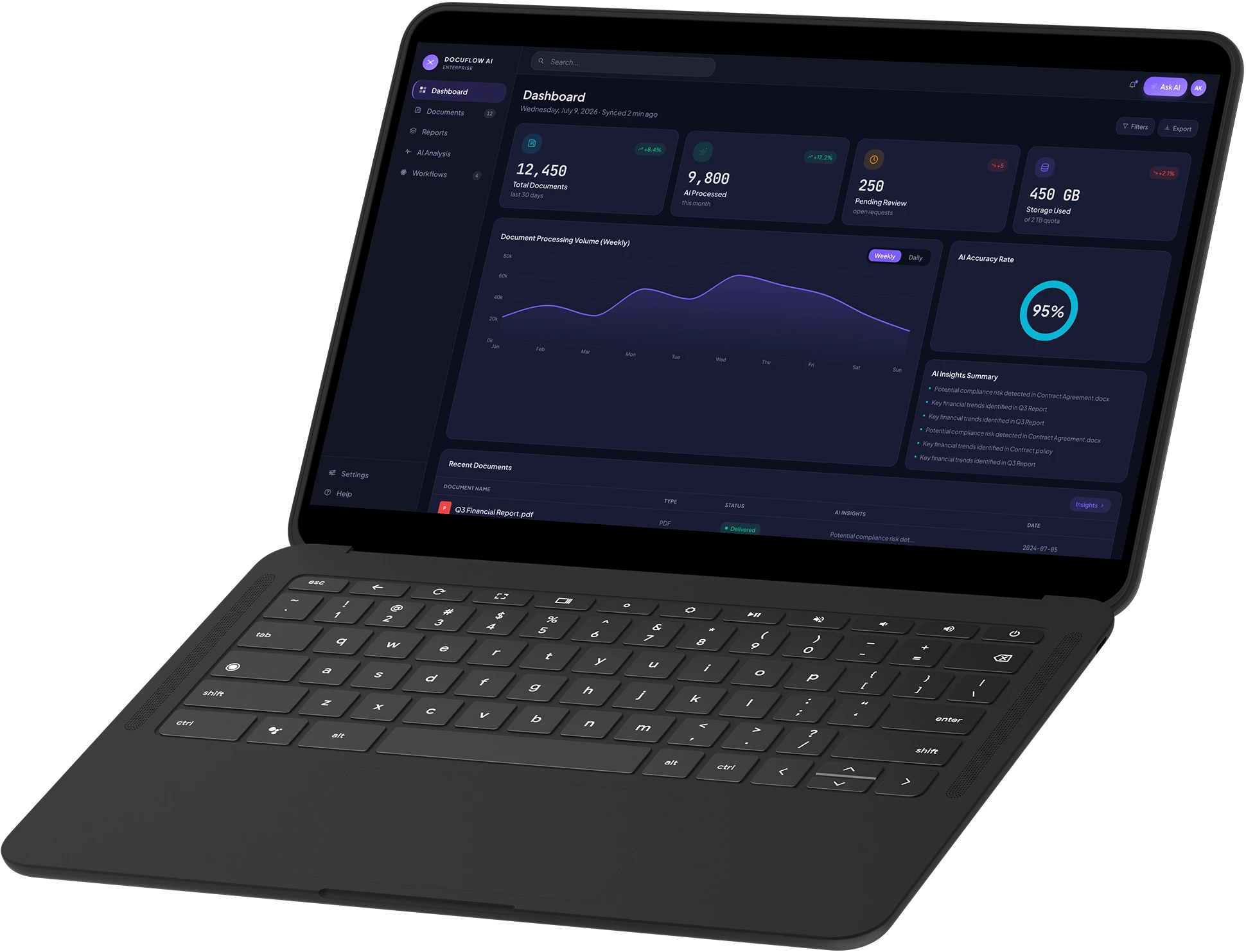
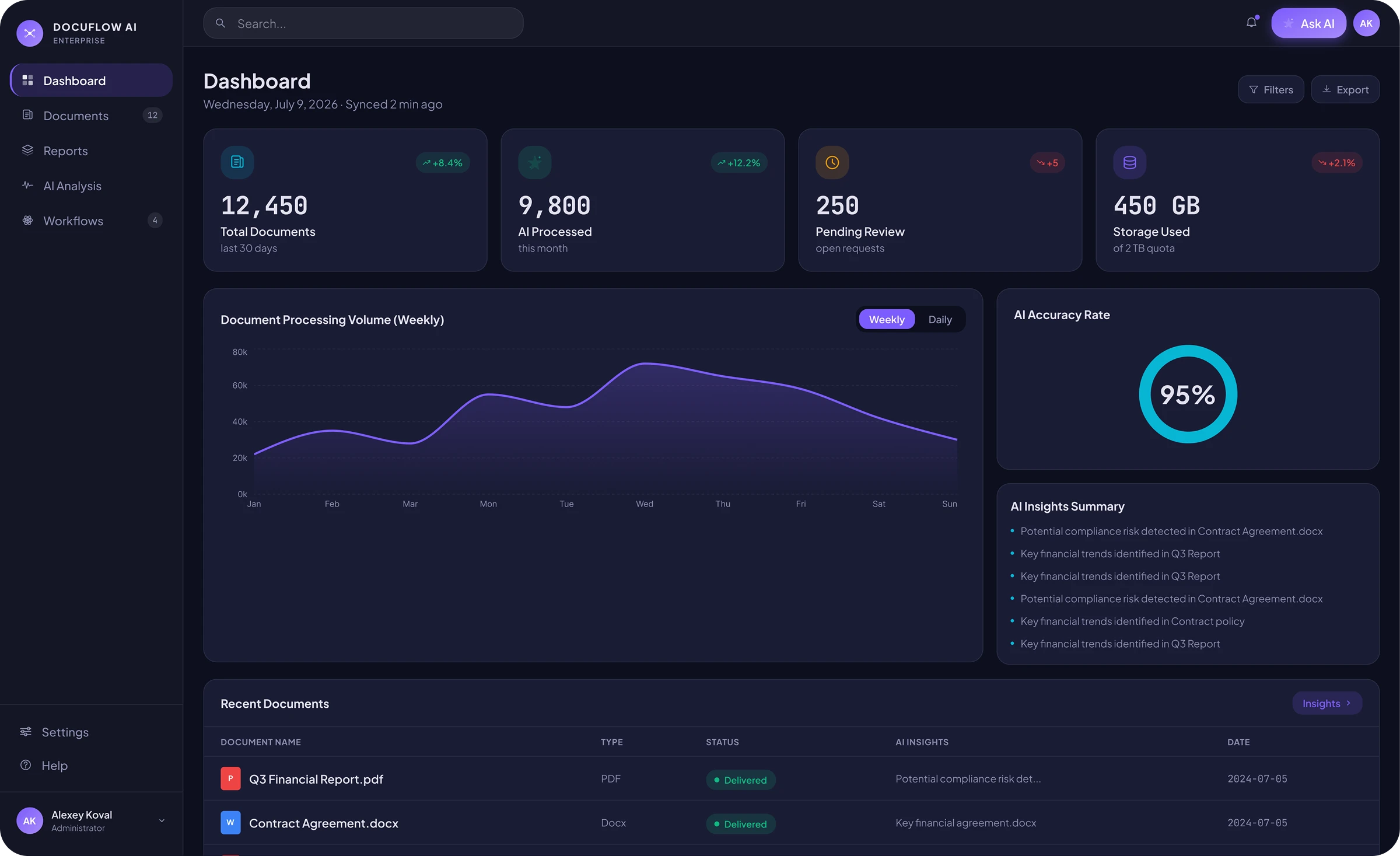
The main screen brings the whole picture together: how many documents are in the system, how many the AI has already parsed, how many are waiting for review and the average recognition accuracy. A volume chart for the last few days and a findings panel point to where risks, disputed clauses or important terms turned up in fresh contracts. The latest documents are listed here too, with statuses and a short hint for each.
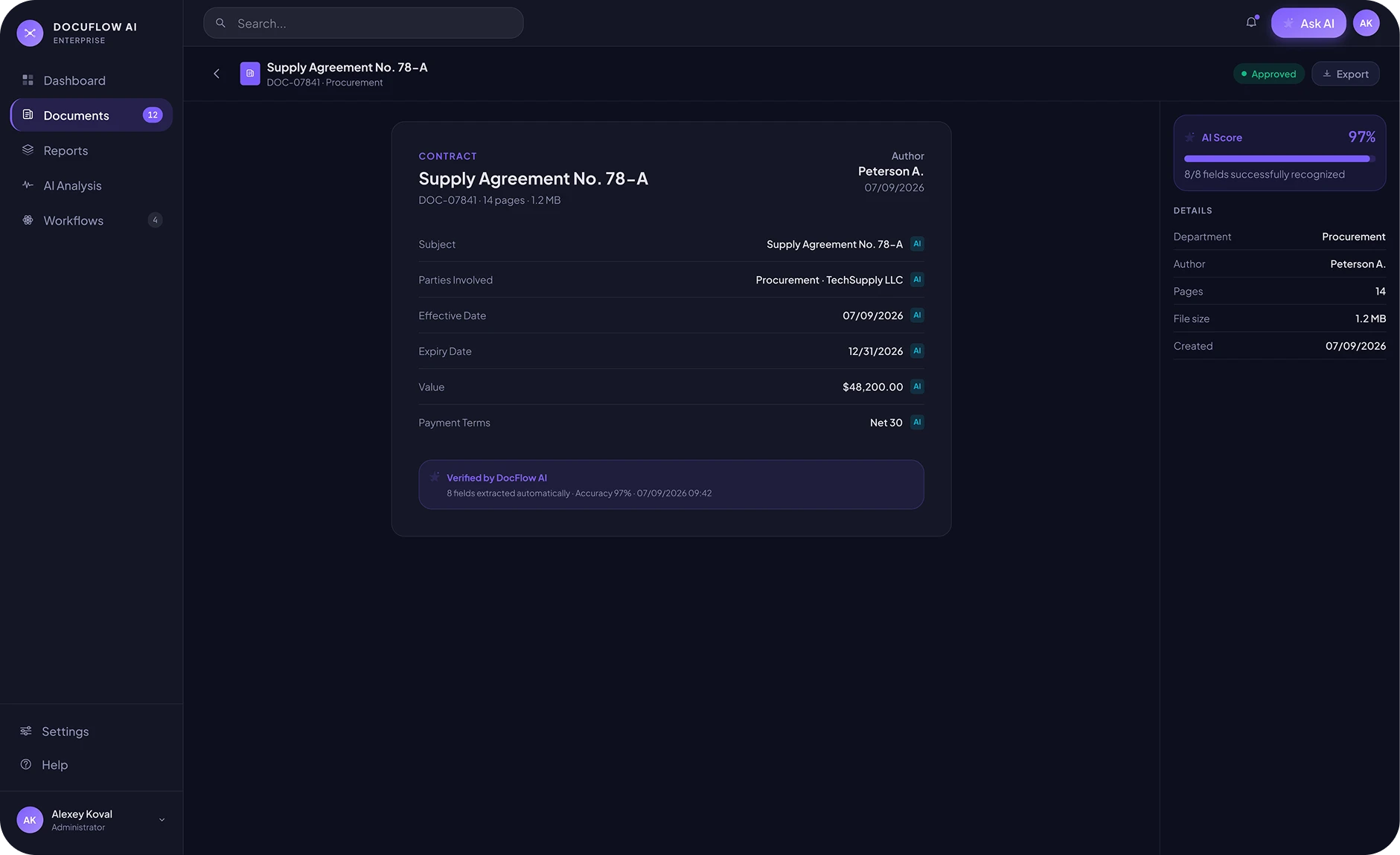
In the document record the fields are filled in automatically: the parties to the contract, dates, amount, payment terms. Each field is marked as recognised by AI, with a confidence level in per cent. There is also an overall review mark and a count of the fields the system filled in itself.
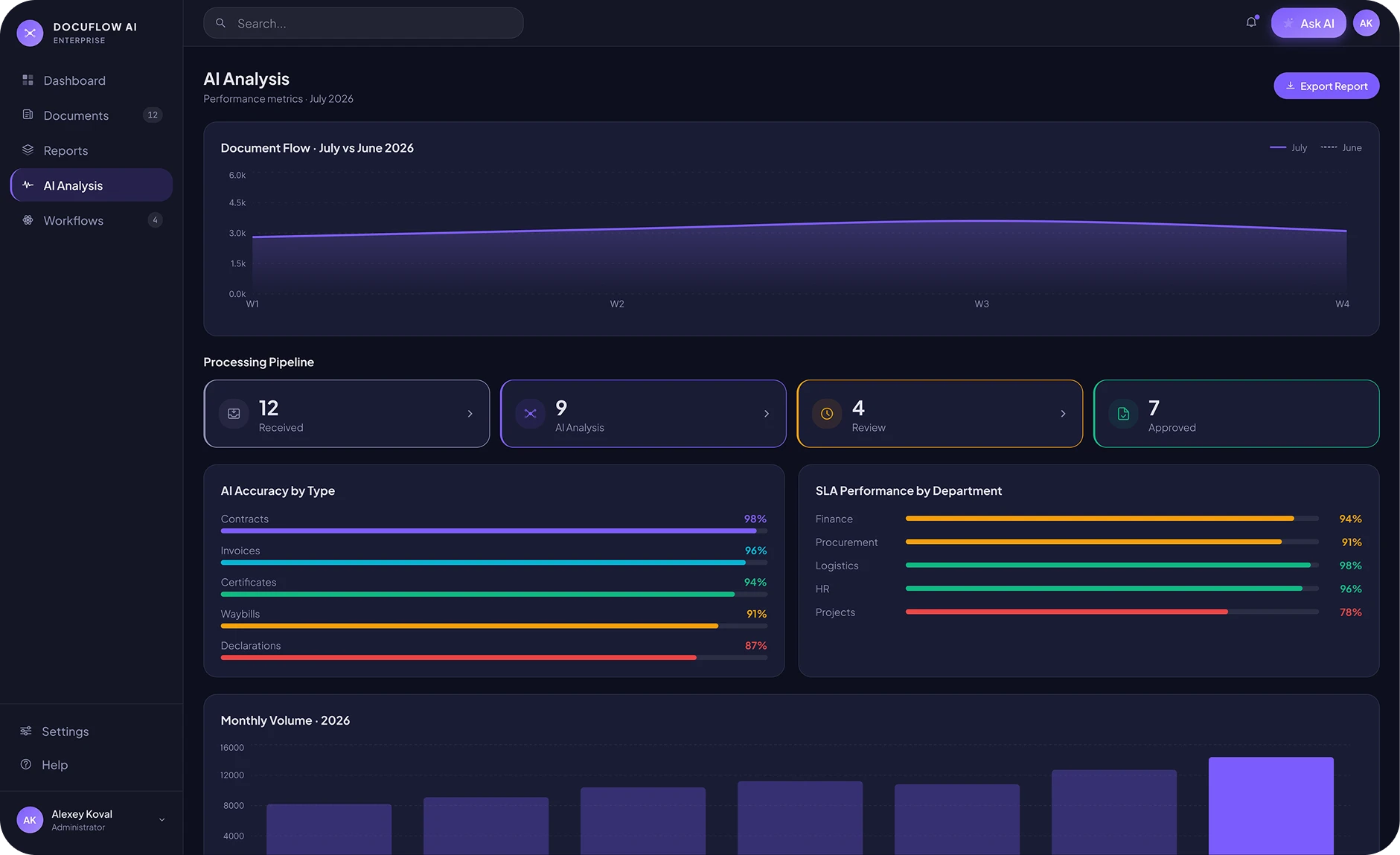
The analytics section shows documents moving through the stages: received, processing, under review, approved. Separate charts show recognition accuracy by document type (contracts, invoices, certificates, waybills, declarations) and how departments are keeping to deadlines. Below that sits a comparison with last month and the spread across the months of the year.
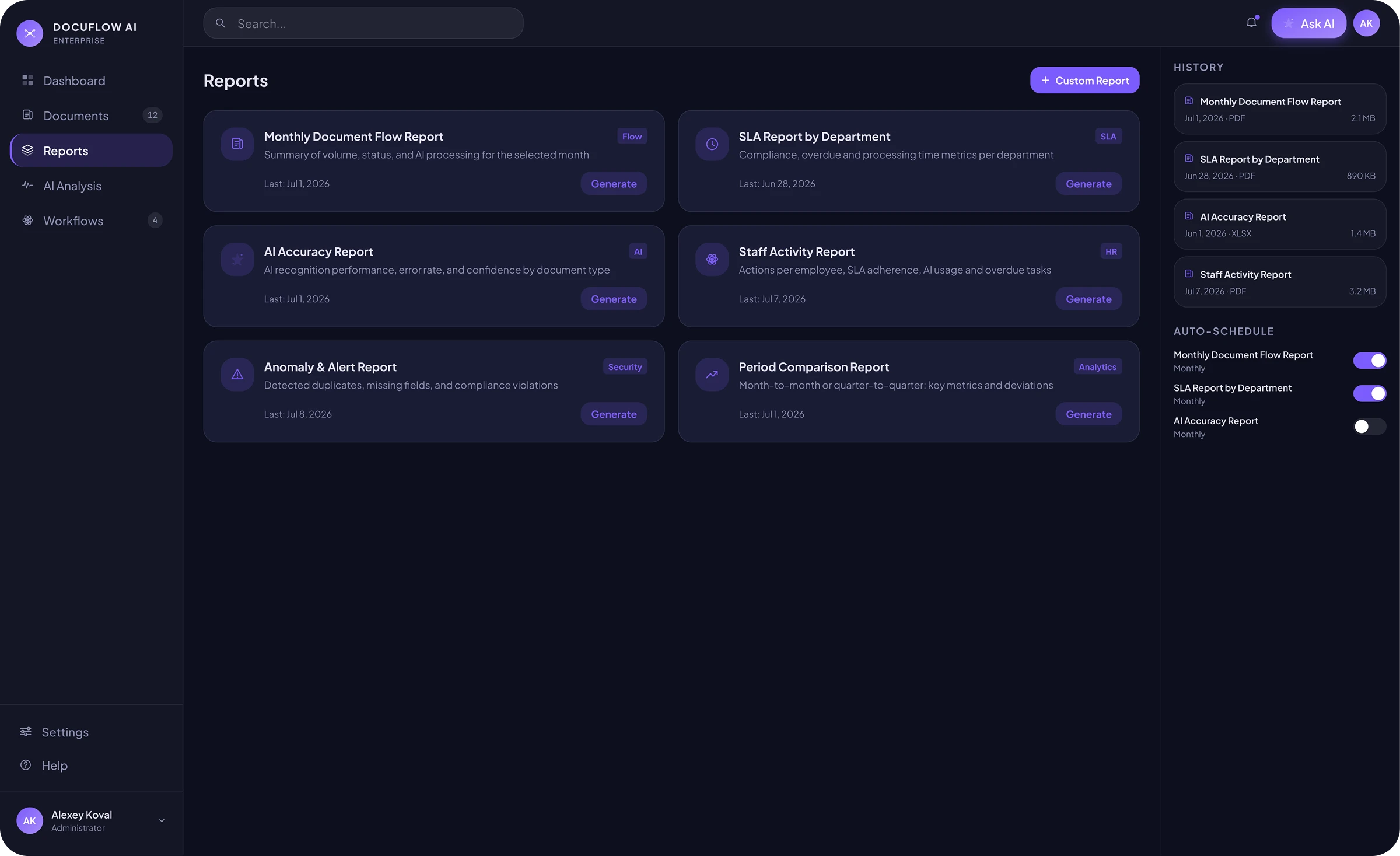
The reports section holds six ready-made forms: monthly document volume, deadline compliance by department, recognition accuracy, staff activity, anomalies found and a period comparison. Any report builds with one click. The ones used most often can be put on a schedule, and the system prepares them by itself.
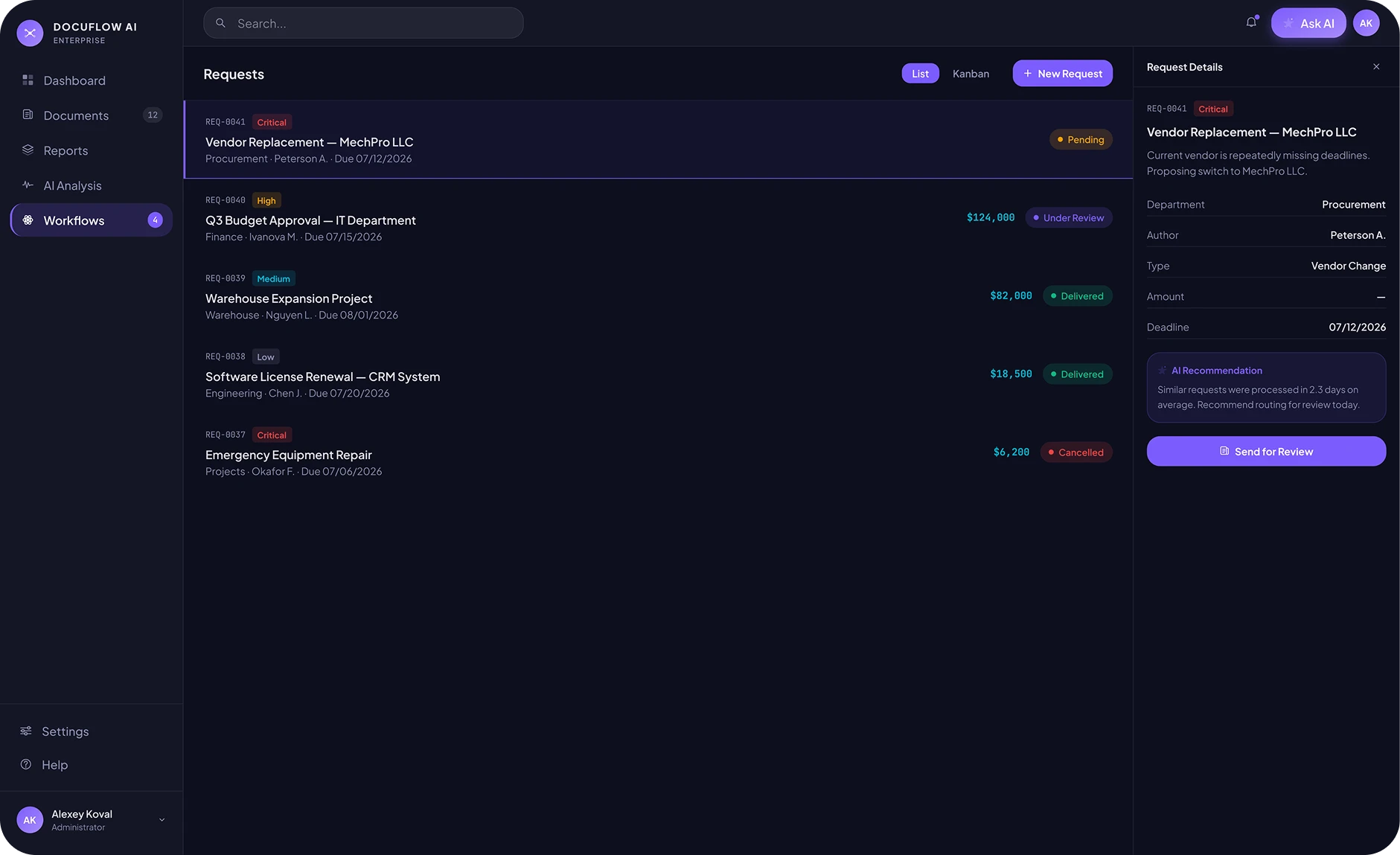
Requests live in one section and can be viewed as a list or as a board by status. It holds the routine ones: supplier replacement, budget approval, licence renewal and the rest. Each request carries a priority — urgent, important or normal. The AI suggests how long such requests usually take and what is worth doing today, drawing on similar cases from the history.
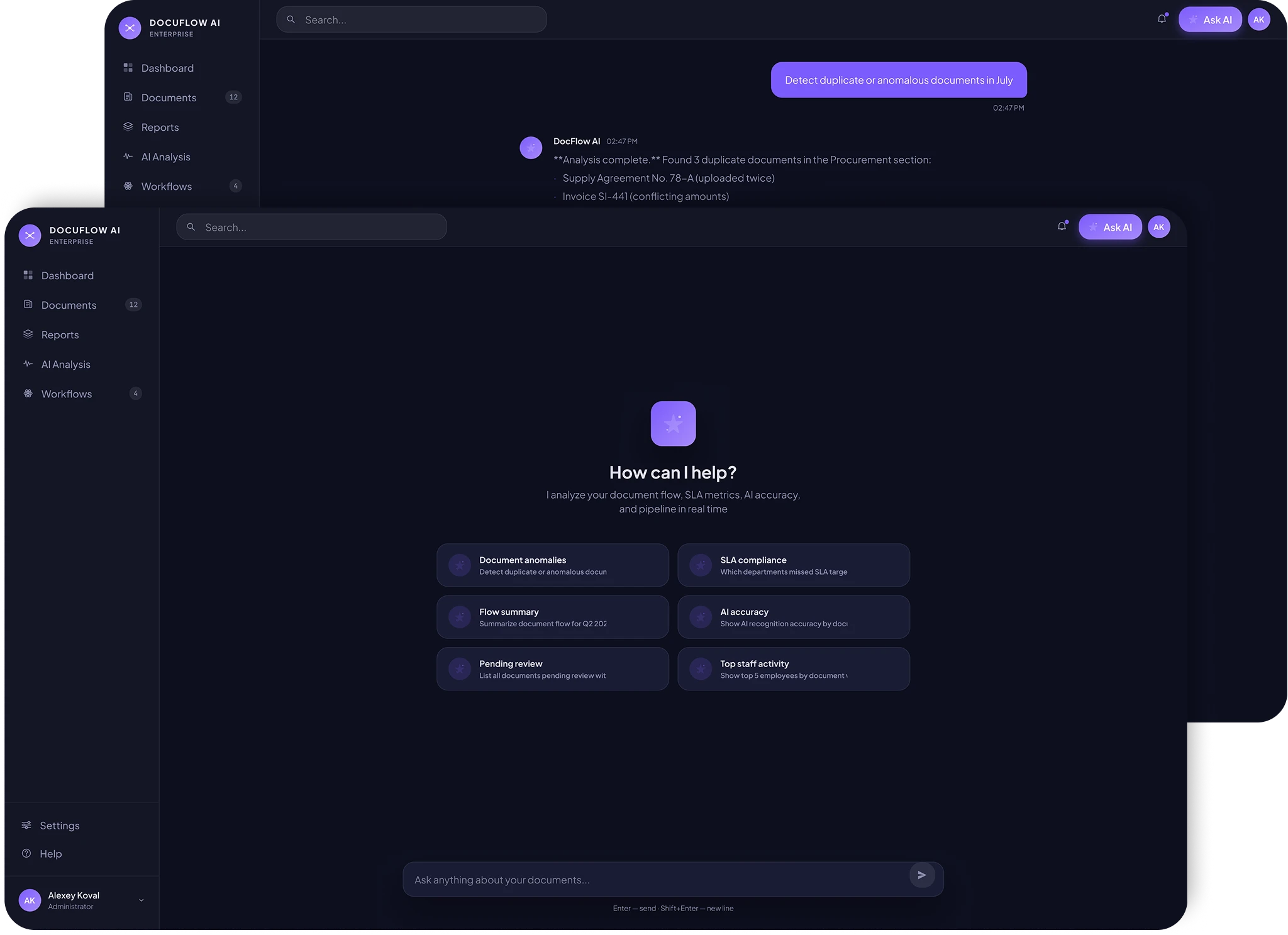
A chat with the AI opens in the top-right corner of any screen. You can ask it in plain language — “find the duplicates from July”, “where were deadlines missed”, “the five most active employees”. The AI answers in text, attaches links to the documents in question and briefly suggests what to do with them next.
Mapped the document flow and the points where it slows the working day down.
Taught the AI to parse and classify the routine document types.
Wired up automatic parsing with data extraction.
Kept a way for a person to check the final result by hand.
After launch the team got back the time that used to go on paperwork. Staff stopped digging through stacks of incoming requests and turned to what actually matters. Documents no longer pile up in the queue, and working with them became calm and predictable.
Wizard AI Our own AI agent. It talks to inbound leads on Telegram and on the site, qualifies them, and passes the manager everything needed to reply.
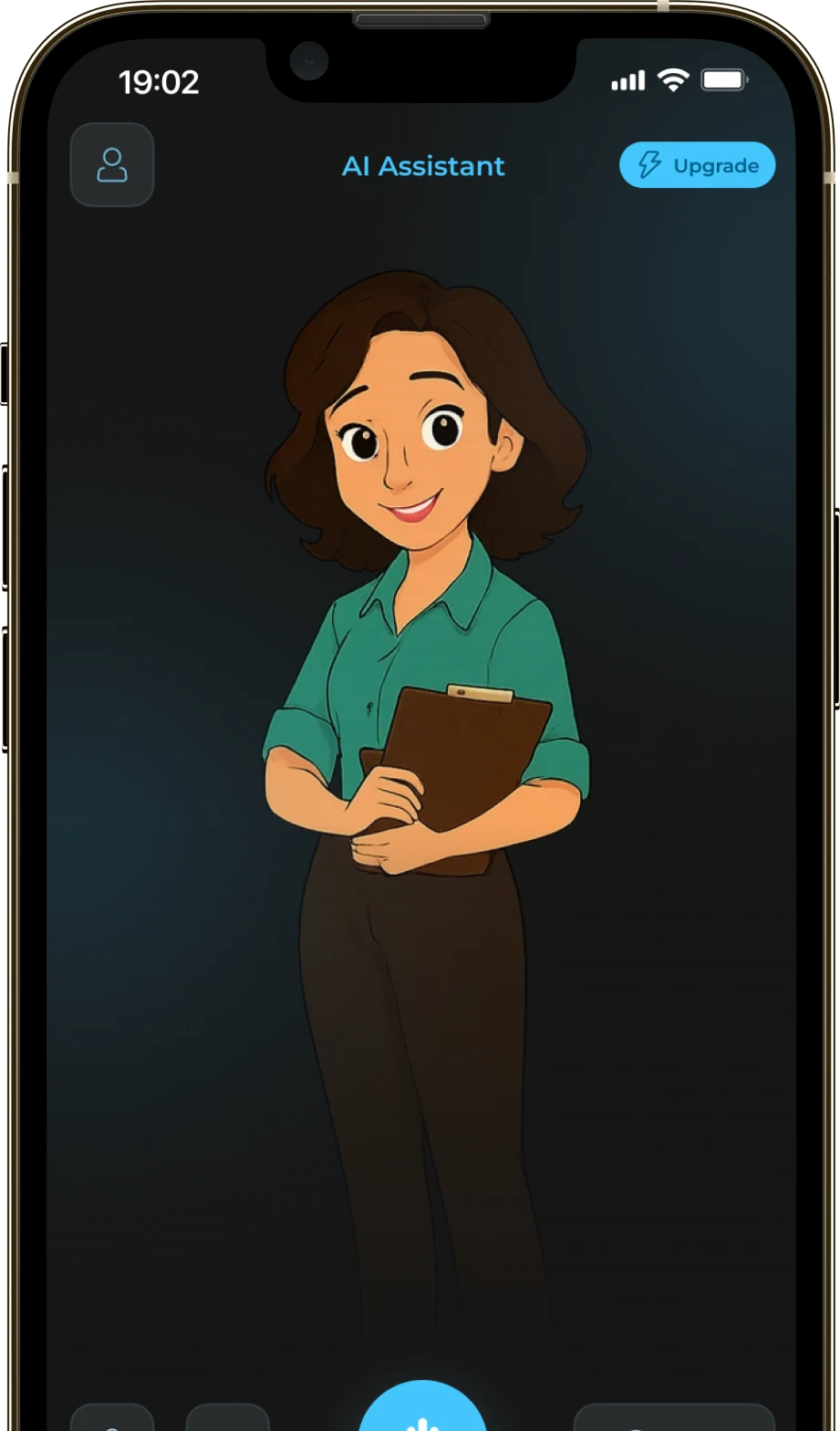
AI Assistant A mobile app with a voice AI assistant and an animated character. Wake word, speech recognition, the AI reply and playback all run as one voice flow.
We’ll break down your idea, outline an action plan and give you a sense of cost and timeline.
We’ll review your idea and get back to you within 24 hours!
Thank you! We’ve received your request and will get back to you shortly using the contact details you provided.
Want to send another request?